Living in Bangkok, Thailand: Expat Guide
Asia's most electric city, a 24/7 metropolis of extraordinary food, Buddhist temples, rooftop bars, and a coworking scene that never sleeps.
Asia's most electric city, a 24/7 metropolis of extraordinary food, Buddhist temples, rooftop bars, and a coworking scene that never sleeps.
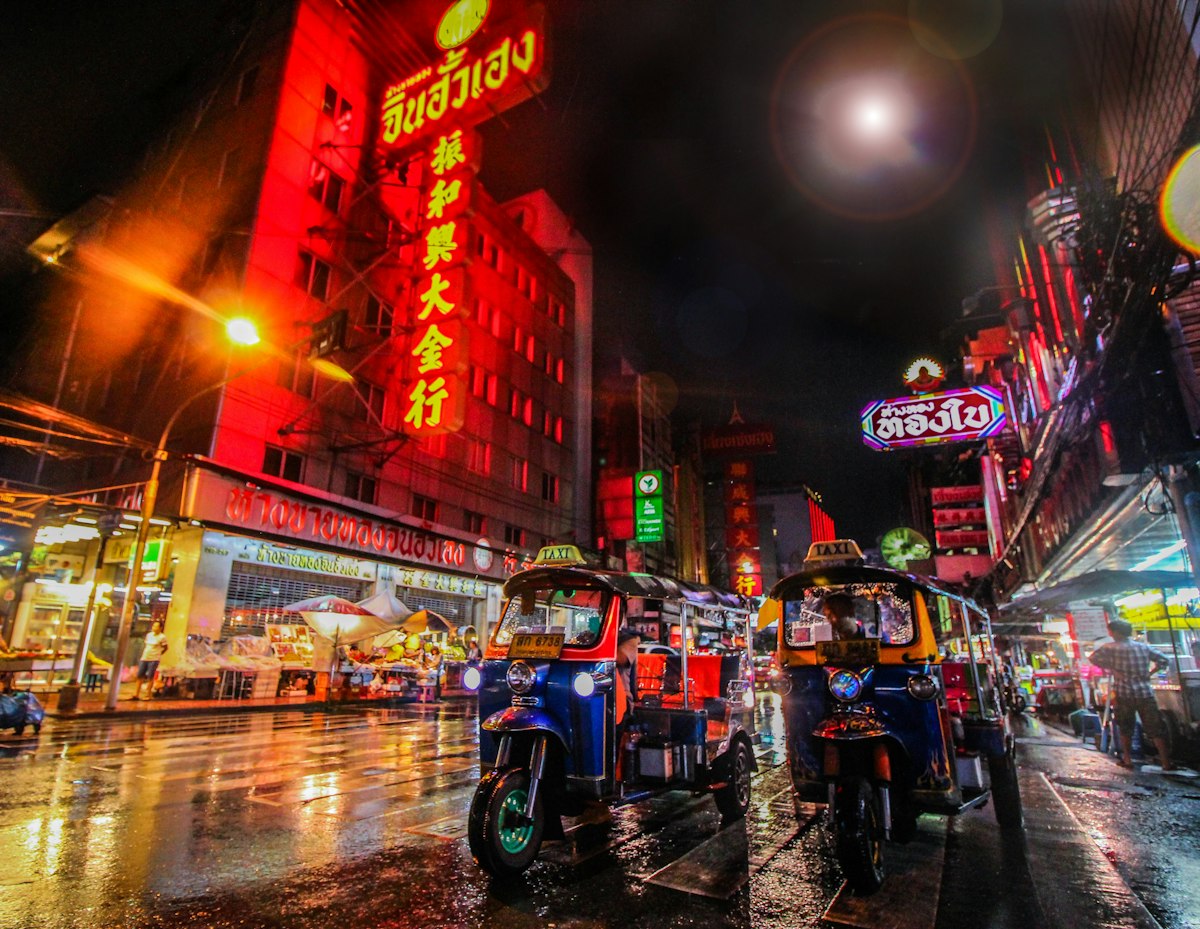
Living in Bangkok, Thailand means operating inside one of the world's most intense, stimulating, and operationally efficient mega-cities. Expat life in Bangkok concentrates near BTS Skytrain stations (Sukhumvit, Silom, and Sathorn) which is practical rather than aesthetic advice: the station is the organizing principle of Bangkok livability. Moving to Bangkok cost of living runs $1,500–$3,500 per month depending heavily on condo tier and lifestyle choices. Bangkok private hospitals (Bumrungrad, Samitivej, BNH) are world-class and fraction the cost of equivalent care in the US or Europe. Street food ranging from $1 to extraordinary is never more than two minutes away. The tradeoffs are genuine: traffic makes Bangkok irrational without the BTS, heat and humidity are year-round, and the city's scale can be genuinely overwhelming. Those who organize life around a station and lean into rather than against the pace find it extraordinary.
Sukhumvit is the primary expat corridor (stretching from Asok (the practical hub) eastward through Thong Lo (the premium condo and Japanese restaurant district) and Ekkamai (quieter, more residential). Silom and Sathorn make up Bangkok's financial district: denser, more corporate, with the expat scene concentrated in service apartments and higher-end condos walking distance from Lumpini Park. Thong Lo specifically has emerged as Bangkok's most internationally visible neighborhood) the standard of restaurants, coffee shops, rooftop bars, and grocery options rivals any wealthy district in London or Singapore. For those willing to navigate the BTS further east, Phra Khanong and On Nut offer near-identical condo quality at 30–40% less, the trade being one additional station.
Primary commute: BTS Skytrain, Grab, MRT
City snapshot
This is usually where things get unclear.
Talk through your move with clarity
Free · 45 minutes
Get a clear read on your situation before you make a decision. We'll map what actually applies to you in Thailand, visa paths, cost reality, and the risks most people don't see coming.
Book a Call →Your personalized plan for Thailand
Your budget answers, mapped against the cities in Thailand: including this one: with neighborhood starting points and a clear cost picture for your move.
$49 · Delivered within 24 hours
City metrics
On the ground
Local Realities
Daily Life
- 01
Bangkok traffic is not an inconvenience, it's a system to navigate. Life improves dramatically when you choose accommodation on or near a BTS or MRT station.
- 02
Bangkok's food ecosystem ranges from $1 street carts to Michelin-starred restaurants within the same block, the best meals are usually found on plastic stools, not in dining rooms.
Culture
- 03
Buddhist culture is not performative in Bangkok, monks are present in the streets at 6am, temples are used daily by residents, and discretion around sacred sites is genuinely expected.
Reality
- 04
Thai visa paths are complex and evolving, the LTR Visa offers a stable long-term option for qualifying high-earners, but most expats cycle on retirement or tourist visas with planned departures.
- 05
Bangkok hospitals (Bumrungrad, Samitivej, BNH) are among the best in Asia, with English-speaking specialists, short wait times, and costs a fraction of Western equivalents.
Who thrives here
- City Life Seekers
- Foodies
- International Business
- Night Owls
Honest tradeoffs
- —Traffic is extreme
- —Heat and humidity year-round
- —Overwhelming scale for some
Typical housing options
Start here
Also worth knowing
Bangkok condos run ฿15,000–฿40,000/mo (≈$420–$1,100) for a modern furnished 1-bedroom near BTS. Chiang Mai and beach towns are 30–50% cheaper for equivalent quality.
More cities in Thailand

Recommended Guides
Guides to help you plan your move to Thailand.
Cost of Living in Thailand for Expats
Accurate monthly cost breakdowns for Thailand's main expat destinations, Bangkok, Chiang Mai, Phuket, and beyo…
Easiest Digital Nomad Visas Right Now
The digital nomad visas that are actually easy to obtain in 2026, with clear income requirements, straightforw…
Raising Children Abroad: A Realistic Family Relocation Guide
What raising children internationally actually involves, international school costs, pediatric healthcare, saf…
Best Countries for Remote Workers
The countries that have built genuine infrastructure for remote work: evaluated on visa frameworks, internet q…
You might also like
Cities with a similar feel across other destinations.


Frequently asked questions
How much does it cost to live in Bangkok?
Monthly budgets in Bangkok range from $1,500 to $3,500 for a comfortable lifestyle. Typical housing options include Modern Condos, Serviced Apartments, High-Rise Apartments.
Is Bangkok good for expats?
Bangkok is particularly well-suited for City Life Seekers, Foodies, International Business, Night Owls. Key tradeoffs to be aware of: Traffic is extreme; Heat and humidity year-round; Overwhelming scale for some. The city scores 7/10 for English-friendliness, making day-to-day life accessible without the local language.
How walkable is Bangkok?
Bangkok scores 4/10 for walkability and 7/10 for public transport. The primary commute mode is BTS Skytrain, Grab, MRT. Suvarnabhumi Airport (45 min) and Don Mueang (40 min).
Is Bangkok good for families?
Bangkok scores 6/10 for family-friendliness, 8/10 for education access, and 9/10 for healthcare access. It is part of Thailand, where international school costs run $650–$2,500/month. Bangkok has an extensive international school market covering British, American, and IB curricula, quality and cost vary considerably, so vetting individual schools is worthwhile.